8 Best Ghost Alternatives in 2026: For Business Blogs That Need More Than Memberships
Ghost started as a beautiful WordPress alternative for writers. It delivered on that promise with a clean editor and distraction-free writing experience. Then it evolved into a membership and newsletter platform.
If you're running a business blog focused on SEO and lead generation (not paid subscriptions), Ghost may no longer be the right fit. Here are the best Ghost alternatives in 2026, with honest assessments of what each does well.
Why Businesses Look for Ghost Alternatives
Ghost is excellent for what it's designed for: publishers monetizing through paid memberships. But for business blogs, several limitations emerge:
Subdirectory hosting costs $199/mo. Ghost(Pro) charges premium prices to run your blog at yoursite.com/blog. Most businesses end up on subdomains, which dilutes SEO authority.
Self-hosting requires DevOps. The open-source version is free, but you need to manage servers, databases, SSL, and updates yourself.
No built-in lead generation. Ghost focuses on memberships, not capturing leads for your sales team.
Missing modern SEO features. No IndexNow protocol, no LLMs.txt for AI search visibility, no internal link suggestions.
Performance varies. Ghost sites typically score 70-85 on Lighthouse. Themes and customizations can drag this lower.
If your goal is organic traffic and lead generation rather than paid subscriptions, these alternatives deliver more value.
The 8 Best Ghost Alternatives for Business Blogs
1. Superblog
Best for: Businesses that want SEO and performance handled automatically
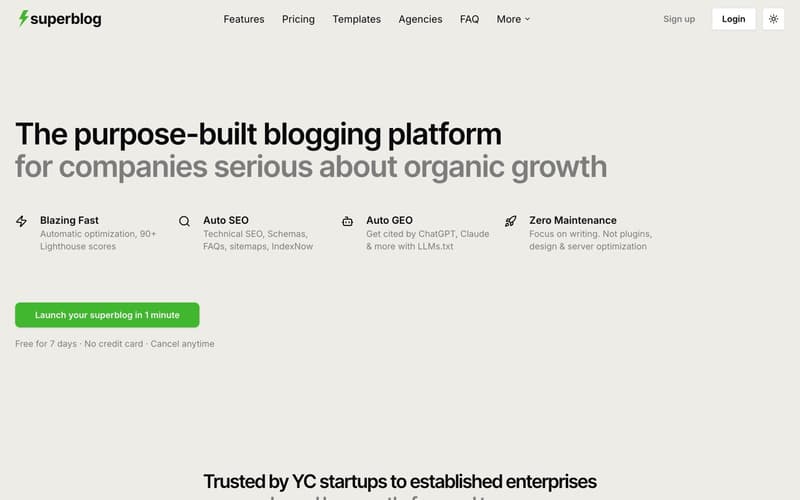
Superblog is purpose-built for companies using content marketing for organic growth. Where Ghost evolved toward memberships, Superblog stayed focused on what business blogs need: speed, SEO, and lead generation.
What sets it apart:
90+ Lighthouse score on every page. JAMStack architecture means pages are pre-built and served from a global CDN. No optimization needed.
Subdirectory hosting on all plans. Run your blog at yoursite.com/blog starting at $29/mo (not $199/mo like Ghost).
Auto SEO engine. JSON-LD schemas, XML sitemaps, IndexNow protocol, and LLMs.txt for AI search visibility. All automatic.
Built-in lead generation. Forms below posts, in sidebars, or as pop-ups. No third-party tools needed.
Internal link suggestions. The editor analyzes your content and suggests related posts to link.
Zero maintenance. No servers, no databases, no security patches.
Pricing: $29/mo (Basic), $49/mo (Pro), $99/mo (Super with AI features)
Limitations: No membership or paywall features. Designed for lead generation, not subscription revenue.
Best for: SaaS companies, startups, agencies, and businesses driving organic traffic.
2. WordPress
Best for: Teams with WordPress expertise who need maximum flexibility
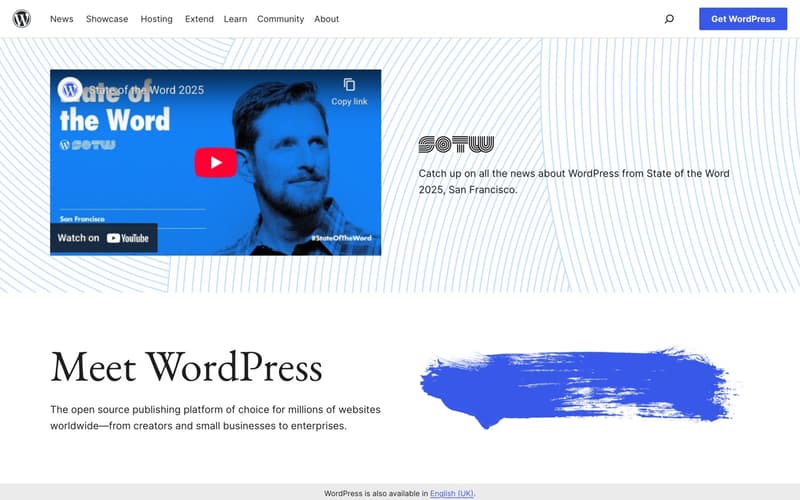
WordPress powers 43% of the web. With the right plugins and hosting, it can do almost anything. The question is whether you want to spend time configuring it.
Strengths:
Massive plugin ecosystem
Complete flexibility and customization
Large developer community
Self-hosted or managed options
Limitations:
Requires 25+ plugins for modern SEO and performance standards
Security target. WordPress is the #1 target for hackers
Maintenance burden. Weekly updates, plugin conflicts, performance optimization
40-60 Lighthouse scores out of the box
Pricing: Free (self-hosted) + hosting costs, or managed WordPress from $25-100+/mo
Best for: Teams with dedicated WordPress developers or agencies with existing WordPress expertise.
3. Webflow
Best for: Design-focused teams building complete marketing sites
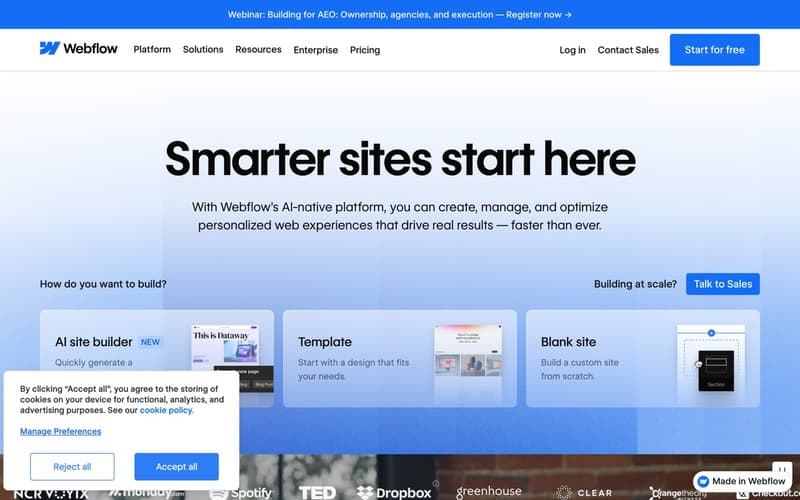
Webflow is a visual website builder that produces professional sites without code. Its blog functionality exists but is secondary to page building.
Strengths:
Stunning visual design capabilities
No-code flexibility for landing pages
Clean, professional output
Decent SEO controls
Limitations:
CMS item limits. 2,000 items on CMS plan ($29/mo), 10,000 on Business ($49/mo). Heavy blogs hit limits fast.
Blog editor is clunky compared to dedicated platforms
Designed for websites first, content second
Requires Webflow expertise to maintain
Pricing: $14-$212/mo depending on plan and CMS needs
Best for: Teams that need both a marketing site and a blog, with design resources available.
4. Substack
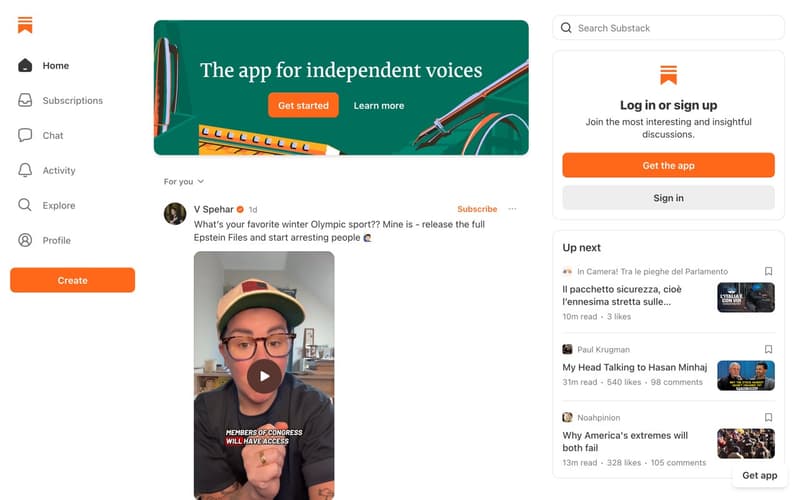
Best for: Writers building newsletter-first audiences
Substack is Ghost's direct competitor in the newsletter/membership space. If you're leaving Ghost but still want paid subscriptions, Substack is the obvious alternative.
Strengths:
Built-in audience through Substack network
Simple paid subscription setup
Clean writing experience
Free to start (Substack takes 10% of paid subscriptions)
Limitations:
No custom domain on subdirectory. Your blog lives on yourname.substack.com
Limited design customization
No lead generation forms
SEO is secondary to newsletter growth
Pricing: Free (10% of paid subscription revenue)
Best for: Individual writers monetizing through newsletters, not business blogs.
5. Medium
Best for: Writers who want instant distribution over ownership
Medium provides access to a large, engaged audience. You can start writing today with zero setup.
Strengths:
Built-in audience and distribution
Clean reading experience
Zero technical setup
Free to publish
Limitations:
You don't own your audience. Medium converts YOUR readers into THEIR paying members.
No subdirectory or custom domain hosting
No lead generation forms
Content can be paywalled without your consent
Pricing: Free to publish
Best for: Individual thought leaders, not businesses driving leads.
6. Hashnode
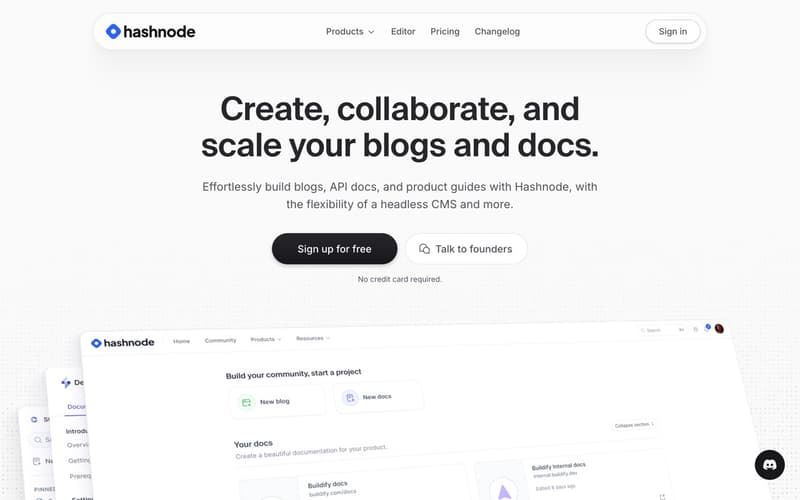
Best for: Developer-focused blogs and technical content
Hashnode is built for developers. If your audience is technical and you want a platform that speaks their language, Hashnode delivers.
Strengths:
Developer-focused features (syntax highlighting, GitHub integration)
Custom domain support
Built-in community and distribution
Free tier available
Limitations:
Narrow audience focus (developers)
Limited design customization
Not built for general business content
Basic SEO compared to dedicated platforms
Pricing: Free tier, Pro from $7/mo
Best for: Developer blogs, technical documentation, engineering teams.
7. HubSpot CMS
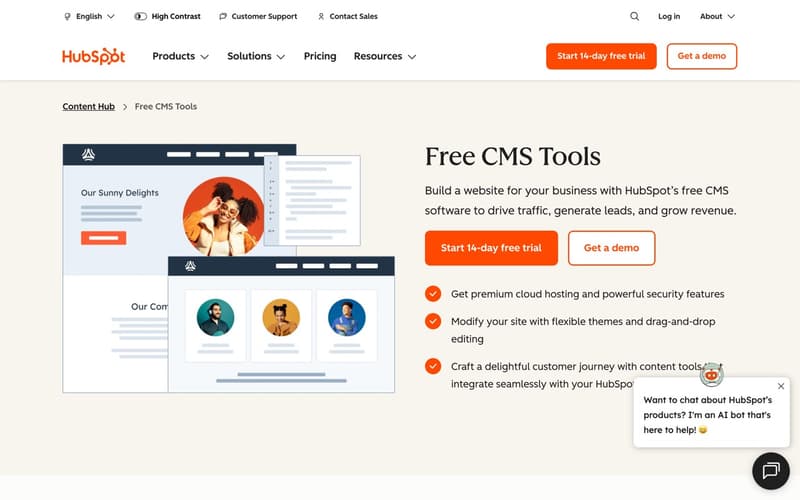
Best for: Companies already invested in the HubSpot ecosystem
HubSpot's CMS integrates with their marketing, sales, and CRM tools. If you're already paying for HubSpot, the CMS provides seamless integration.
Strengths:
Tight integration with HubSpot marketing tools
Built-in analytics and lead tracking
Smart content personalization
Strong enterprise support
Limitations:
Expensive. CMS Hub starts at $25/mo but scales to $400+/mo for meaningful features.
Locked into HubSpot ecosystem
Overkill for just a blog
Requires HubSpot expertise
Pricing: $25-$1,200/mo
Best for: Companies already standardized on HubSpot.
8. Hugo / Jekyll (Static Site Generators)
Best for: Developers who want maximum control and minimal cost
Hugo and Jekyll are open-source static site generators. You write in Markdown, run a build command, and deploy HTML files.
Strengths:
Blazing fast (static HTML)
Free and open source
Complete control
Can be hosted free (GitHub Pages, Netlify, Vercel)
Limitations:
Developer required. No GUI, no visual editor.
No CMS for non-technical team members
SEO optimization is manual
Maintenance falls on your team
Pricing: Free (hosting may cost extra)
Best for: Developer blogs, documentation sites, technical teams.
Ghost Alternatives Comparison Table
How to Choose the Right Ghost Alternative
Choose Superblog if: You're a business using content marketing for organic growth. You want SEO, performance, and lead generation handled automatically, with subdirectory hosting that doesn't cost $199/mo.
Choose WordPress if: You have WordPress expertise, need maximum flexibility, and don't mind the maintenance overhead.
Choose Webflow if: You need a complete marketing website with visual design tools, and have resources to maintain it.
Choose Substack if: You're an individual writer who wants to monetize through paid newsletters.
Stay on Ghost if: You're building a membership-based publication and the $199/mo subdirectory cost is acceptable for your business.
Migrating from Ghost
Superblog supports direct imports from Ghost. Your posts, images, and content transfer over. The process:
Export your Ghost content (Settings > Labs > Export)
Import into Superblog
Set up redirects from old URLs
Verify your sitemap in Google Search Console
Most migrations complete in under an hour.
The Bottom Line
Ghost is excellent for publishers monetizing through memberships. But if you're running a business blog focused on SEO and lead generation, you're paying for features you don't need while missing features you do.
Superblog delivers what business blogs actually require: fast pages that rank, automatic SEO optimization, and built-in lead generation. All with subdirectory hosting that costs $29/mo, not $199/mo.
Ready to switch from Ghost?Start your free Superblog trial and import your content today.