
Will Tesla Bring FSD v14 Lite to HW3 Cars in Europe? What UNECE R171.02 Changes
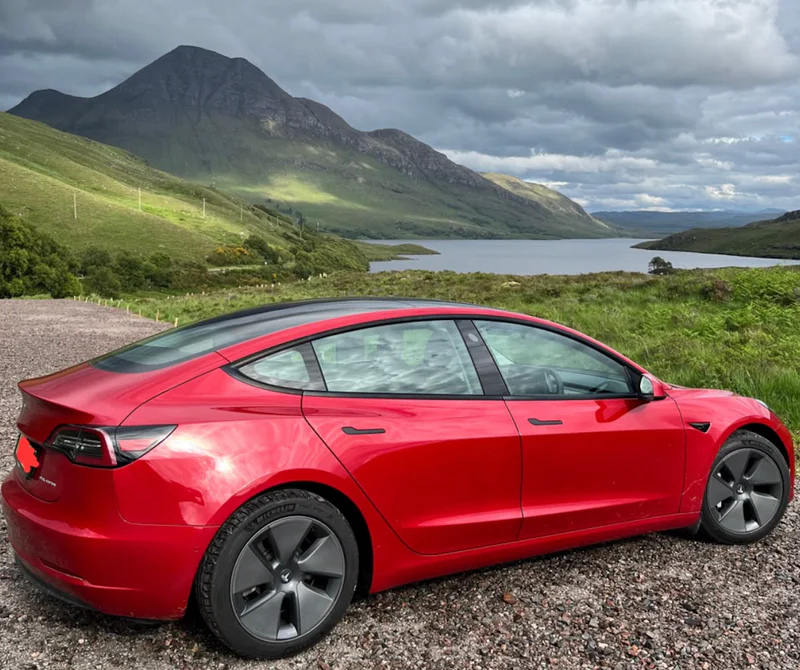
Tesla has now demonstrated two things that, taken together, create a very interesting question for European owners of older Model 3 and Model Y vehicles.
First, Tesla has a real production version of FSD v14 Lite running on AI3/HW3 hardware. Tesla confirmed in its Q2 2026 shareholder update that it had begun delivering FSD v14 Lite to AI3 vehicles in the United States and South Korea. Tesla describes it as a version that distills the driving behaviour of the AI4 v14 series into the older AI3 camera and compute configuration.
Second, Europe now has a much more suitable regulatory framework approaching: the 02 series of amendments to UNECE Regulation No. 171, usually shortened to UN R171.02.
This creates the obvious question:
Once R171.02 is in force, will Tesla actually certify FSD v14 Lite for the enormous installed base of HW3 Model 3 and Model Y vehicles in Europe and Great Britain?
There is no public Tesla commitment yet that answers that question.
But we can break the problem down into its technical, regulatory and commercial parts, and the picture becomes much clearer.
TL;DR
The most important points are:
Tesla's current European Article 39 FSD approval is explicitly centred on HW4. Tesla's own Article 39 evidence dashboard identifies the European FSD configuration under evaluation as
FSD (Supervised, HW4).FSD v14 Lite is different from a "regulation-lite" version of FSD. It exists primarily because HW3 has less compute and different cameras than HW4. Tesla already deploys v14 Lite on AI3 vehicles in the US and South Korea.
Article 39 is an exemption process. Tesla had to demonstrate that its system provided at least an equivalent level of safety even though parts of its behaviour were incompatible with the existing regulatory framework.
R171.02 changes the problem. Instead of proving why a deviation from an older regulation should be accepted, Tesla can potentially configure HW3 FSD Lite to comply with R171.02 and then demonstrate that compliance through the normal type-approval process.
That still requires serious validation. Tesla cannot simply say "HW4 passed, therefore HW3 passes." It would need to include the relevant HW3 vehicle/system configuration in the approval scope and demonstrate its capabilities using documentation, track testing, public-road verification, driver-monitoring tests, simulation and ongoing in-service monitoring.
Tesla probably does not need another Article 39-style 1.8-million-kilometre exercise just because the system runs on HW3. R171 uses a multi-pillar compliance framework rather than prescribing that Tesla recreate the same comparative evidence package used for the Article 39 exemption.
The commercial case may be large. A reasonable estimate suggests Europe may still contain roughly 750,000 to 900,000 potentially addressable HW3 Model 3/Y vehicles. Great Britain alone may have around 165,000 to 170,000. Even modest FSD subscription adoption could represent tens or hundreds of millions of euros in annual software revenue.
The biggest remaining question is therefore probably not "Can HW3 be approved under R171.02?" It is "Will Tesla decide to maintain and homologate the HW3 FSD Lite branch for Europe?"
1. First, separate three things that are often mixed together
A lot of confusion comes from treating the following as if they were the same thing.
They are not.
FSD v14 Lite
This is Tesla's software branch for AI3/HW3 cars.
In its Q2 2026 shareholder update, Tesla said:
"We began delivering FSD v14 lite to customers in the U.S. and South Korea … with AI3 hardware."
Tesla says this software distills the behaviour of the AI4 v14 series into the older AI3 camera and compute configuration. It includes functionality involving navigation handling, merges and forks, pedestrians, traffic lights, cut-ins, destination options and speed profiles.
So "Lite" primarily refers to the fact that Tesla has adapted the newer FSD behaviour to run on older AI3 hardware.
It does not inherently mean "European restricted FSD."
Source: Tesla Q2 2026 shareholder update
UN Regulation No. 171
UN R171 is the UNECE regulation governing Driver Control Assistance Systems (DCAS).
These are advanced driver-assistance systems where the driver remains responsible and must supervise the system.
This is important because FSD (Supervised) is still a driver-assistance system, not an autonomous Level 4 system.
The driver remains responsible.
Article 39
Article 39 of EU Regulation 2018/858 is something quite different.
It is a route for approving a vehicle, system or technology when the new technology is incompatible with one or more existing regulatory acts.
The manufacturer must explain the incompatibility and demonstrate that the alternative provides at least an equivalent level of safety and environmental protection.
That is the route Tesla used with the Dutch approval authority RDW for its initial European FSD Supervised approval.
Source: EU Regulation 2018/858, Article 39
2. Why Tesla used Article 39 for FSD in Europe
Tesla's FSD driving policy did not fit neatly inside the version of the European DCAS regulatory framework that existed when Tesla began its European approval programme.
Instead of waiting for every relevant restriction to be rewritten, Tesla applied through Article 39.
The Article 39 mechanism effectively allows a manufacturer to say:
Our technology cannot comply with requirement X in its current form, but here is evidence showing that our alternative implementation provides at least equivalent safety.
That is a fundamentally different regulatory problem from ordinary compliance.
Under Article 39, Article 39(2) explicitly requires:
an explanation of why the technology is incompatible with the existing regulatory acts;
an explanation of the safety implications;
measures intended to provide at least equivalent safety; and
test descriptions and results demonstrating that equivalence.
This explains why Tesla's European approval programme became so evidence-heavy.
3. The scale of Tesla and RDW's Article 39 validation
RDW says it spent more than 18 months assessing Tesla FSD Supervised.
According to RDW, the process involved:
more than 3,000 hours of testing;
more than 1,000 test runs;
test-track testing;
public-road testing;
different road types;
complex urban traffic;
different weather conditions; and
data involving 1.8 million kilometres of European FSD driving.
RDW also independently assessed Tesla's statistical analysis and compared Tesla vehicles operating with FSD against other Tesla vehicles operating without FSD.
Source: RDW explanation of the FSD Supervised type approval, 17 June 2026
This is not a normal "bring one vehicle to a test centre and pass a few tests" exercise.
It was a safety-equivalence case designed to justify regulatory exemptions.
4. And the European Article 39 system is explicitly HW4
This is one of the strongest reasons HW3 owners are right to be cautious.
Tesla's own Article 39 evidence dashboard identifies the European FSD configuration as:
FSD (Supervised, HW4)
Tesla explicitly explains that the analysis controls for HW4 because HW4 represents the configuration Tesla seeks to launch in the European market.
The dashboard includes European engineering-fleet mileage on highways, arterials, urban collectors and local-access roads, and uses that evidence as part of the Article 39 safety case.
Source: Tesla Article 39 FSD evidence dashboard
So the current evidence is not merely "generic FSD evidence."
Tesla intentionally defined the European launch configuration around HW4.
That means an HW3 owner should not assume that the existing Article 39 approval automatically covers an HW3 Model 3 or Model Y.
5. Why would Tesla choose HW4 first?
There are several rational reasons.
HW4 is:
the current-generation FSD computer;
paired with newer cameras;
significantly more capable computationally;
used in current production vehicles; and
the architecture Tesla wants to support for new vehicles going forward.
If Tesla was going to spend 18 months building an extraordinary Article 39 safety case, it made sense to focus that effort on its current hardware generation first.
This does not necessarily mean Tesla has decided to abandon HW3 in Europe.
It means Article 39 made HW4 the obvious first target.
6. R171.02 changes the regulatory problem
This is where things get much more interesting for HW3 owners.
The January 2026 GRVA meeting adopted the draft 02 series of amendments to UN Regulation No. 171 and submitted it to WP.29.
WP.29 subsequently considered the 02-series package in June 2026.
The new series significantly expands the DCAS framework, including provisions relevant to more advanced, FSD-style supervised driving.
UNECE's January 2026 GRVA meeting records explicitly state that the draft R171.02 package was adopted by GRVA.
Source: UNECE GRVA 24th session, 19-23 January 2026
Source: UNECE proposal for the 02 series of amendments to UN Regulation No. 171
At a high level, R171.02 is important because it expands the regulatory framework for things such as system-initiated manoeuvres outside traditional highway-only operation and under more advanced supervised-driving conditions.
The 02 series is widely expected to become operational after the normal UNECE entry-into-force process, around early 2027. The exact legal applicability in each market still depends on the relevant UNECE and domestic implementation steps.
7. Why R171.02 is fundamentally different from Article 39
Imagine Tesla wants to bring an HW3 Model 3 running FSD v14 Lite to Europe.
Under an Article 39 approach, the argument can look like this:
Existing regulation says X.

Tesla FSD does Y.

Y does not comply with X.

Tesla must demonstrate that Y nevertheless provides
at least an equivalent level of safety.
That is an exemption case.
Under a normal R171.02 approval, the problem becomes:
R171.02 permits this class of system behaviour,
subject to requirements A, B, C, D...

Tesla configures HW3 + FSD Lite to satisfy those requirements.

Tesla demonstrates compliance.

The authority approves the vehicle/DCAS type.
This difference is enormously important.
Tesla still needs evidence.
Tesla still needs testing.
Tesla still needs documentation.
Tesla still needs the approval authority to be satisfied.
But Tesla is no longer starting from:
"We know this system violates the normal rule, so please accept an exception."
Instead, it is starting from:
"This system is designed to fit the rule. Here is the evidence that it does."
8. Does this mean Tesla can avoid another 1.8-million-kilometre evidence package?
Potentially, yes.
More precisely:
R171.02 does not require Tesla to recreate the exact Article 39 evidence programme merely because it wants to approve an HW3 configuration.
The 1.8 million kilometres were part of the particular Tesla/RDW Article 39 evaluation.
Normal R171 validation follows a defined multi-pillar framework.
UNECE materials describe R171 validation as including:
assessment of the system's safety documentation;
physical testing on test tracks;
physical/public-road verification;
in-service monitoring; and
optional virtual testing, provided the simulation toolchain is shown to be credible.
UNECE's text describes this explicitly as a multi-pillar assessment intended to compensate for the fact that it is impossible to physically test every possible DCAS operating situation.
Source: UNECE material containing the R171 validation and Annex 4/5 framework
This does not make approval trivial.
But it makes the job much more bounded and structured than an open-ended exemption case.
9. What exactly would Tesla have to submit for HW3 FSD Lite?
Tesla would first need to define the system configuration it wants approved.
Conceptually, the configuration might look something like:
Vehicle:
Tesla Model 3 / Model Y

FSD computer:
AI3 / HW3

Camera configuration:
Relevant HW3 production camera set

Driver monitoring:
Relevant cabin-camera / driver-monitoring configuration

Software:
FSD v14 Lite Europe build

Operating domain:
Declared road types, speeds and environmental conditions

Capabilities:
Lane positioning
Lane changes
System-initiated manoeuvres
Turns
Junction handling
Roundabouts
Traffic-control response
Obstacle response
Longitudinal control
Other declared capabilities
The exact approval scope is a homologation question, but the fundamental point is simple:
the authority approves a defined vehicle/system type and its declared capabilities.
It does not approve an abstract concept called "Tesla FSD."
10. HW4 approval would not automatically mean HW3 approval
This is another critical point.
Suppose Tesla gets:
Model 3 + HW4 + FSD v14
                ↓
          R171.02 approved
Tesla cannot necessarily conclude:
Therefore:

Model 3 + HW3 + FSD v14 Lite
                ↓
          automatically approved
HW3 differs in meaningful ways.
It has different compute capability.
It has a different camera generation.
It runs a different software branch.
The perception and inference behaviour may differ.
The authority therefore needs evidence that the HW3 implementation itself meets the requirements relevant to the approval.
However, that does not mean Tesla must start from zero.
Tesla may be able to reuse substantial parts of:
system architecture;
safety-management processes;
driving-policy validation methods;
simulation infrastructure;
scenario libraries;
driver-monitoring logic;
documentation;
validation tooling;
prior European road knowledge; and
existing FSD safety analysis.
The HW3-specific work would focus on proving that the AI3 implementation continues to satisfy the required performance envelope.
11. What does "HW3-specific testing" actually mean?
This phrase can sound vague, so it is worth making it concrete.
R171's physical-test framework says that the approval authority or its technical service performs or witnesses tests, selects relevant parameters from the manufacturer's declared capabilities, and can perform additional tests.
The tests are not merely generic demonstrations.
They are tied to what the manufacturer says the system can do.
For example, Tesla might declare that FSD Lite can maintain lane positioning over a particular speed range and curvature envelope.
The authority can then test an actual HW3 car close to those boundaries.
Conceptually:
HW3 Model 3

Speed: selected by approval authority
Road: curved test track
FSD Lite: active
Driver steering input: absent

Goal:
Verify that the vehicle remains stable,
stays appropriately positioned,
and respects its declared lateral-performance envelope.
UNECE's Annex 4 framework explicitly includes tests involving lane positioning and maximum declared lateral acceleration.
12. Collision and road-user scenarios
The authority can also evaluate how the HW3 implementation responds to surrounding traffic.
Depending on the declared capabilities, relevant scenarios can involve things such as:
stationary vehicles;
slower-moving vehicles;
vehicles cutting in;
lead vehicles moving away from an obstacle;
pedestrians;
powered two-wheelers;
bicycles;
intersections;
other vehicles crossing the vehicle's path;
turning conflicts; and
situations near the boundaries of the system's capabilities.
A simplified example:
                 Oncoming vehicle
                       ↓

-----------------------+--------------------
                       |
                 Tesla |
                       |
                       └── intended turn
The question is no longer simply:
Can the car steer?
The authority is interested in questions such as:
Did the system correctly assess the traffic?
Did it yield when required?
Did it initiate the manoeuvre appropriately?
Did it remain within its declared operational limits?
Was the manoeuvre controllable?
Did the driver unexpectedly need to rescue the system?
For HW3, Tesla has to show that AI3 perception + AI3 compute + FSD Lite performs adequately in the relevant scenarios.
13. The regulator does not test every possible driving situation physically
That would be impossible.
Consider the combinations:
road geometry
× speed
× traffic density
× vehicle trajectories
× pedestrian behaviour
× bicycle behaviour
× visibility
× weather
× lane geometry
× initial distance
× relative speed
× driver state
The scenario space quickly becomes enormous.
This is why R171 also allows virtual testing.
14. Simulation is a major part of the answer
R171's virtual-testing framework is particularly relevant to Tesla.
UNECE describes several possible approaches, including:
Model-in-the-Loop;
Software-in-the-Loop;
Hardware-in-the-Loop;
Vehicle-in-the-Loop;
Driver-in-the-Loop; and
other simulation-based validation methods.
But Tesla cannot simply submit a graph from its simulator and declare victory.
The simulation environment itself must be credible for the intended purpose.
UNECE's Annex 5 framework identifies properties including:
capability;
accuracy;
correctness;
usability; and
fitness for purpose.
The manufacturer must establish confidence that the simulation corresponds sufficiently closely to real-world behaviour.
Source: UNECE R171 virtual-toolchain framework
15. What simulation validation could look like
Imagine Tesla physically tests an HW3 Model 3 against a pedestrian target.
The real car produces:
Pedestrian enters path:        t = 0.00
FSD detects conflict:          t = 0.31
Braking begins:                t = 0.48
Maximum deceleration:          X
Final separation distance:     Y
Tesla then runs the corresponding scenario through its simulation stack.
If the virtual model repeatedly reproduces the important physical behaviour within acceptable tolerances, Tesla can build confidence that the simulator is suitable for exploring variations that would be expensive or dangerous to reproduce physically.
Then Tesla can vary:
pedestrian speed
initial distance
Tesla speed
road curvature
vehicle offset
lighting
traffic position
reaction timing
across a much larger scenario space.
The physical test anchors reality.
The validated simulation expands coverage.
This is one reason a manufacturer with mature simulation infrastructure can potentially certify advanced driver-assistance functions without physically driving millions of kilometres purely for homologation.
16. Hardware-in-the-Loop could be particularly relevant to HW3
UNECE's framework specifically recognises Hardware-in-the-Loop (HIL) testing.
That is interesting for an HW3 approval.
Tesla can potentially place the real AI3 hardware into a controlled simulation environment and feed it representative sensor inputs.
Conceptually:
Virtual road environment
        ↓
Simulated sensor signals
        ↓
Actual HW3 / AI3 computer
        ↓
Actual FSD Lite software
        ↓
Steering/braking decisions
        ↓
Virtual vehicle/environment reacts
        ↓
Next sensor state
That allows Tesla to exercise the actual production compute hardware across a huge number of repeatable scenarios.
It does not eliminate real-car testing.
But it can dramatically increase coverage.
17. Public-road verification still matters
R171's framework also includes public-road verification where applicable.
The type-approval authority can conduct or witness an assessment of the system operating in real traffic.
The purpose is to observe the system in its real operating environment.
The route can be designed to include scenarios relevant to the capabilities Tesla declares.
For an FSD-style system, that might conceptually involve:
urban road
↓
traffic light
↓
junction
↓
pedestrian crossing
↓
lane selection
↓
roundabout
↓
dual carriageway
↓
motorway merge
↓
motorway exit
The authority can log data channels and review system behaviour afterwards.
Dangerous edge cases do not need to be deliberately recreated in public traffic. Those can be assessed on test tracks or through validated simulation.
18. Driver monitoring must also pass
FSD Supervised remains supervised.
That means driver monitoring is not optional.
The system needs to determine whether the driver remains sufficiently engaged and capable of taking control when necessary.
Testing can include situations such as:
Driver attentive
      ↓
Normal operation

Driver repeatedly looks away
      ↓
System detects disengagement
      ↓
Warning escalation

Driver does not respond
      ↓
System applies required mitigation
This matters because the regulatory safety model assumes that the human driver is still responsible.
FSD Supervised under R171 is not Robotaxi.
19. The system architecture itself is audited
Passing track tests is not enough.
Tesla also needs to provide documentation explaining how the system is designed and how safety is managed.
UNECE's R171 framework includes manufacturer documentation and safety assessment covering the system and its boundaries.
The approval authority can examine things such as:
system architecture;
declared capabilities;
preconditions for operation;
system boundaries;
failure handling;
driver interaction;
driver monitoring;
control strategies;
expected misuse;
behaviour near system limits;
software identification;
validation processes; and
safety-management processes.
So the regulatory model is closer to:
Engineering audit
+
Physical validation
+
Public-road verification
+
Validated simulation
+
Post-deployment monitoring
than:
Drive one test route and pass.
20. Approval does not end when customers receive the software
Modern software-defined vehicles create another problem.
The software continues to change.
R171 therefore includes an in-service monitoring concept.
The manufacturer continues monitoring the deployed system and reporting relevant safety information.
This is important for FSD because deployment itself creates a much larger sample of real-world situations than pre-approval testing ever could.
A regulator can therefore approve a system based on structured pre-deployment validation while continuing to monitor its behaviour after rollout.
21. Why this matters enormously for HW3
Now return to the original question.
Would Tesla need to repeat the entire RDW Article 39 programme for HW3?
Not necessarily.
Instead of:
Collect another giant comparative European dataset
↓
Prove why regulatory non-compliance is nevertheless safe
↓
Request another exceptional approval
R171.02 potentially lets Tesla do:
Create R171.02-compatible Europe FSD Lite build
↓
Define HW3 system capabilities and boundaries
↓
Reuse applicable existing engineering/safety work
↓
Perform HW3-specific track tests
↓
Perform HW3-specific perception/control validation
↓
Validate with simulation/HIL
↓
Perform required public-road verification
↓
Complete type-approval audit
↓
Add HW3 configuration to approval scope
That is still real engineering work.
But it is a much more conventional homologation exercise.
22. Tesla already did the hardest product work: FSD v14 Lite exists
This is perhaps the strongest argument in favour of eventual European HW3 support.
Tesla is not being asked to invent an HW3 version of modern FSD from scratch.
It already exists.
Tesla said in Q2 2026 that FSD v14 Lite is being delivered to AI3 vehicles in:
the United States; and
South Korea.
That is particularly important because South Korea demonstrates that Tesla is willing to take the AI3 Lite branch outside North America.
Source: Tesla Q2 2026 shareholder update
So the remaining European work is primarily:
European driving adaptation
+
UNECE-compliant behaviour
+
validation
+
homologation
+
ongoing maintenance
rather than:
invent FSD for HW3
23. Tesla also still treats FSD Computer 3.0 as commercially relevant
Tesla's own European support pages are interesting here.
Tesla's Netherlands support page says owners who have FSD Computer 3.0 installed can subscribe to Full Self-Driving Capability, while also warning that actual FSD Supervised availability depends on vehicle configuration, hardware, software, country, regulatory approvals, model, trim and model year.
Source: Tesla Netherlands FSD subscription support
Tesla's UK support page similarly says that a vehicle with FSD computer 3.0 or above can subscribe to Full Self-Driving Capability.
Source: Tesla UK Full Self-Driving Capability subscriptions
This is not proof that Tesla will certify HW3 FSD Supervised in Europe.
But it is evidence that Tesla has not publicly defined AI3/HW3 as irrelevant to its European FSD product.
24. The commercial question: how many HW3 cars are we talking about?
This is where the story becomes especially interesting.
There is no public Tesla database that simply says:
Europe currently contains exactly X active HW3 Model 3/Y vehicles.
So any estimate must combine vehicle-registration data with approximate hardware transition dates.
We should therefore use a range instead of pretending the number is exact.
25. European Model 3 installed base
European Model 3 registrations were approximately:
Sources:
The 2019-2022 cars are overwhelmingly from the HW3 era.
The refreshed Model 3 "Highland" introduced HW4 to Europe late in 2023, so 2023 is a mixed transition year.
That puts the likely European HW3 Model 3 population somewhere around the high-400,000s to roughly 500,000, before allowing for vehicles that have been written off, exported or otherwise removed from the active fleet.
26. European Model Y installed base
European Model Y registrations were approximately:
There were also Model Y deliveries in Europe during 2021.
Sources:
The hardware transition on Model Y varied by factory.
Independent tracking indicates that Berlin and Shanghai production remained on HW3 through most or all of 2023, with the transition to HW4 occurring around the end of 2023 or into 2024 depending on factory and destination.
For the UK specifically, buyer-guide tracking places the first Shanghai-built HW4 Model Y arrivals around April 2024.
Source: Go Green Autos Model Y hardware history
This means a very large share of European Model Y vehicles sold through 2023 are likely HW3.
27. A reasonable European HW3 range
Putting Model 3 and Model Y together suggests something like:
roughly 750,000 to 900,000 potentially addressable HW3 Model 3/Y vehicles across Europe
is a reasonable working range.
This should be treated as an estimate, not an official Tesla fleet count.
Why use a range?
Because we do not know perfectly:
the exact HW3/HW4 cutover by every factory and destination;
how many vehicles have left Europe;
how many have been written off;
how many specific variants would satisfy future approval requirements; or
whether Tesla would make every HW3 configuration eligible.
The point is not whether the exact answer is 812,000 or 874,000.
The important point is:
The European HW3 installed base is plausibly measured in hundreds of thousands of vehicles approaching a million, not tens of thousands.
That changes the economics.
28. Great Britain alone is a significant market
The UK numbers are unusually useful because government/DVLA registration data gives us a clearer picture.
Model 3 registrations through 2023 total roughly 100,000.
A DVLA-derived dataset reports:
Source: How Rare Is My Car, based on DVLA registration data
Official DfT statistics report 35,600 Model Y registrations in 2022 and 35,899 in 2023.
Sources:
Since UK Model Y HW4 deliveries did not become common until 2024, those 2022-23 Model Ys are effectively part of the HW3-era installed base.
Allowing for late-2023 Model 3 Highland HW4 deliveries and normal fleet attrition gives a rough GB HW3 Model 3/Y population of:
around 165,000 to 170,000 vehicles
Again, this is an estimate rather than a Tesla-published number.
29. How much could that installed base be worth?
Tesla now charges €99 per month for FSD Supervised in the Netherlands.
Source: Tesla Netherlands FSD
For a conservative illustration, suppose Europe contains 800,000 addressable HW3 vehicles and the subscription price averages roughly €99/month.
The revenue sensitivity looks like this:
This is not a forecast.
It is simply a sensitivity analysis showing the scale of the opportunity.
Even at only 10% adoption, an 800,000-car installed base at €99/month represents roughly €95 million of annual gross subscription revenue.
30. Is a 10% take rate unrealistic?
We do not have a clean Tesla-published figure saying:
X% of all eligible US HW3 owners subscribe to FSD.
So we should not invent one.
But Tesla does give us useful context.
In Q2 2026, Tesla reported:
9.7 million cumulative vehicle deliveries globally; and
1.48 million active FSD subscriptions.
Tesla's definition includes paid FSD users, including customers who paid upfront, and excludes free trials.
Source: Tesla Q2 2026 shareholder update
Tesla also said on its Q2 earnings call that approximately 55% of new North American deliveries had FSD enabled at delivery in that quarter.
That 55% figure should not be applied directly to Europe's old HW3 installed base.
New-car buyers in North America are a very different cohort.
But it does demonstrate that Tesla has reached meaningful FSD monetisation when the product is available and sufficiently capable.
Using 5%, 10%, 15% and 20% scenarios for older European vehicles is therefore useful as a sensitivity exercise.
31. Great Britain alone could justify meaningful engineering effort
Using a hypothetical GB HW3 installed base of 165,000 vehicles, and using £99/month purely as an illustrative subscription price:
The actual future UK FSD Supervised price may differ.
The point is simply that Britain alone contains a commercially meaningful HW3 fleet.
32. Great Britain has its own regulatory step
The UK is no longer inside the EU type-approval system for Great Britain.
England, Scotland and Wales use the GB type-approval scheme.
In August 2026, the Department for Transport opened a consultation proposing to incorporate UNECE Regulation 171 into the GB type-approval framework for passenger and goods vehicles fitted with DCAS.
The consultation explains that manufacturers normally test prototypes against the relevant standards and obtain approval through the UK's Vehicle Certification Agency.
It also notes that the UK is a contracting party to the UNECE 1958 Agreement and describes reciprocal recognition of approvals under UNECE regulations.
Source: UK Department for Transport, Updating GB type approval for passenger and goods vehicles
So for GB owners, there are effectively two questions:
Does the GB regulatory framework accept the relevant R171 level?
Does Tesla include the relevant HW3 Model 3/Y configuration in an approved deployment?
33. The cost of homologation is probably not the biggest problem
Suppose, purely as an illustration, Tesla had to spend:
€10 million;
€20 million; or
even €50 million
on European HW3 engineering, regulatory work, simulation, test vehicles, certification and validation.
At a 10% take rate on an 800,000-car installed base at €99/month, gross subscription revenue could be around:
€95 million per year
At 15%:
roughly €143 million per year
This does not mean all of that is profit.
There are engineering costs, compute costs, customer-support costs, regulatory costs, taxes and other expenses.
But FSD is software monetisation layered on top of vehicles that Tesla has already sold.
So a potentially nine-figure annual European revenue opportunity makes it difficult to argue that a one-time homologation programme is obviously uneconomic.
34. The real economic problem is long-term maintenance
This is the more important issue.
Approving HW3 once is not the end of the story.
Tesla would need to maintain something like:
AI4 FSD development
        +
AI3 FSD Lite distillation
        +
European/UNECE driving adaptation
        +
AI3 European regression testing
        +
regulatory documentation
        +
future R171 compliance
        +
fleet monitoring
Every major new AI4 FSD behaviour may need to be distilled or adapted for AI3.
Every European software release may need regression validation.
Every regulatory change may create additional work.
So the real commercial decision is not:
"Is one R171 test programme worth doing?"
It is:
"Is the remaining lifetime value of the European HW3 fleet large enough to justify maintaining this software and regulatory branch for several more years?"
That is harder to answer.
35. Why I still think HW3 certification is commercially plausible
Several facts point in the same direction.
1. The fleet is large
Europe plausibly has hundreds of thousands of HW3 Model 3/Y vehicles.
2. FSD Lite already exists
Tesla has already paid the cost of developing a modern AI3 FSD branch.
3. Tesla already exports that branch
FSD v14 Lite is not US-only. Tesla says it is also deploying it in South Korea.
4. Tesla is moving toward subscriptions
Tesla reported 1.48 million active FSD customers in Q2 2026 and has increasingly moved FSD monetisation toward recurring subscriptions.
5. European pricing is already real
FSD Supervised is already offered at €99/month in the Netherlands.
6. R171.02 provides a standard route
Tesla would no longer necessarily need to justify the same set of behaviours through an exceptional Article 39-equivalence case.
Taken together, those factors make HW3 support commercially plausible.
36. Why HW4 will probably still come first
None of the above means HW3 will launch simultaneously with HW4.
HW4 remains the obvious priority.
It powers new vehicles.
It has more compute.
It has newer cameras.
Tesla is already using it for its European Article 39 safety case.
Tesla therefore has a strong incentive to homologate and deploy the HW4 configuration first.
A plausible sequence is:
R171.02 available
        ↓
Tesla completes European R171.02 HW4 configuration
        ↓
HW4 receives approval
        ↓
Tesla deploys/expands HW4 FSD Supervised
        ↓
Tesla completes additional HW3 FSD Lite validation
        ↓
HW3 configuration added through approval extension
or separate approval
        ↓
Eligible older Model 3/Y vehicles receive OTA update
That is speculation, not a Tesla-announced roadmap.
But it fits both the engineering incentives and the economics.
37. What would make the HW3 case look bad?
There are several scenarios that could change the conclusion.
HW3 fails an important R171.02 performance requirement
Perhaps AI3 compute or the older camera suite cannot reliably meet a particular requirement across the necessary operational domain.
Tesla could then:
restrict the HW3 operating domain;
reduce maximum operating speed;
disable specific manoeuvre types;
make the European Lite build more conservative; or
decide the resulting product is no longer attractive enough to launch.
The maintenance burden becomes too high
If AI4 FSD evolves rapidly while AI3 requires increasingly expensive distillation and validation work, Tesla may eventually decide to stop feature parity.
Tesla narrows commercial support
Tesla might decide that only certain Model 3/Y years or camera configurations are worth certifying.
Regulatory implementation diverges by market
A technically valid UNECE route does not guarantee every country deploys or recognises the system on exactly the same schedule.
These are real risks.
38. What should an HW3 owner actually watch?
Do not focus only on headlines saying:
"R171.02 is live."
That is necessary, but it is not sufficient.
The much more important signals are the following.
Signal 1: Tesla files or receives an R171.02 approval
The first question is whether Tesla moves its European FSD programme onto the new normal regulatory framework.
Signal 2: The approval documentation identifies AI3/HW3
This is the big one.
Look for language such as:
AI3
HW3
FSD Computer 3.0
FSD v14 Lite
or vehicle variants that clearly correspond to older HW3 Model 3/Y configurations.
Signal 3: Tesla begins European HW3 engineering-fleet testing
A visible increase in AI3 European validation cars would be meaningful.
Signal 4: Tesla's European support pages explicitly list HW3 as FSD Supervised eligible
Today's support language keeps FSD Computer 3.0 commercially eligible for the broader FSD package, but Tesla still qualifies availability by hardware, model year, configuration and regulatory approval.
An explicit FSD Supervised eligibility statement for AI3 would be stronger.
Signal 5: Approval extensions appear after HW4 approval
This may be the most realistic route.
HW4 first.
HW3 later through an extension or additional approval.
39. What happens to an existing HW3 car if Tesla gets approval?
If Tesla eventually obtains approval covering an existing HW3 Model 3/Y configuration, consumers should not need to take each car individually through type approval.
The regulatory work occurs at the vehicle/system type level.
For an eligible owner, the consumer experience could be much simpler:
Tesla receives approval
        ↓
Tesla maps eligible VIN/configurations
        ↓
Required software build becomes available
        ↓
Vehicle receives OTA update
        ↓
Owner subscribes or activates eligible FSD package
        ↓
FSD Supervised / FSD Lite becomes available
Tesla's Netherlands support page already says that an eligible FSD Capability subscription can transition when the vehicle becomes eligible through regulatory approval and receives the required software update.
Source: Tesla Netherlands FSD subscriptions
40. So, will Tesla actually do it?
There is no public confirmation yet.
That is the most important sentence in this entire article.
Tesla has not publicly committed, as of September 2026, to an R171.02 approval programme specifically covering European HW3 + FSD v14 Lite.
Anything beyond that is inference.
But the inference is becoming increasingly interesting.
The case against HW3 is:
Tesla chose HW4 for Article 39
+
HW3 is older hardware
+
maintaining a second branch costs engineering resources
The case for HW3 is:
FSD v14 Lite already exists
+
Tesla already deploys it internationally
+
Europe contains a very large HW3 installed base
+
Tesla still commercially recognises FSD Computer 3.0
+
FSD subscriptions can produce high-margin recurring revenue
+
R171.02 offers a much cleaner regulatory pathway than Article 39
The second list is substantial.
41. My current expectation
This section is explicitly analysis, not confirmed information from Tesla.
My base case would be:
Stage 1
HW4 receives priority in Europe.
That is where Tesla already has its Article 39 validation effort and where all new-car economics point.
Stage 2
Tesla evaluates an R171.02 HW3/FSD Lite configuration.
A large amount of the regulatory architecture and FSD validation methodology can potentially be reused.
Stage 3
If AI3 can satisfy the relevant R171.02 requirements without making the product unusably restricted, Tesla submits the HW3 variant for approval.
Stage 4
Eligible HW3 Model 3/Y vehicles receive the functionality through an OTA software update.
So I would frame the uncertainty this way:
The biggest risk is probably not that R171.02 inherently prevents HW3 FSD Lite. The bigger risk is whether Tesla considers long-term European AI3 support technically and commercially worthwhile.
Given the scale of the installed base, existing FSD Lite development and recurring subscription opportunity, I think there is a credible business case for Tesla to do it.
But until an approval filing or approval certificate explicitly includes AI3/HW3, it remains a plausible outcome rather than a promise.
42. The single document that could settle the debate
For an HW3 owner, the most valuable future document will not be another Tesla tweet or another headline about R171.02.
It will be the actual type-approval documentation.
If it says:
FSD (Supervised)
Hardware: AI4 / HW4 only
then HW3 owners still have a problem.
If it says:
FSD (Supervised)
Approved variants:
AI4 / HW4
AI3 / HW3 / FSD v14 Lite
or Tesla subsequently files an extension that adds AI3, the situation changes completely.
At that point the question is no longer:
"Will regulators allow HW3?"
It becomes:
"When will Tesla push the approved build to eligible cars?"
For European and British owners of 2019-2023 Model 3 and Model Y vehicles, that HW3 line in the homologation paperwork may ultimately matter more than the headline date on which R171.02 enters into force.
Conclusion
Tesla's decision to launch its initial European Article 39 programme on HW4 does not necessarily tell us what it will do under R171.02.
The two approval routes solve different problems.
Article 39 required Tesla to justify deviations from existing requirements by building an unusually extensive equivalent-safety case.
R171.02 provides a regulatory framework designed to accommodate much more capable supervised DCAS behaviour directly.
That means an HW3 FSD Lite approval would still require serious evidence, but it would be a structured compliance exercise involving system documentation, physical testing, public-road verification, virtual testing and in-service monitoring.
Tesla would not simply inherit HW4 approval.
But it also would not necessarily need to recreate the entire HW4 Article 39 programme from scratch.
Most importantly, Tesla has already developed FSD v14 Lite for AI3, already ships it in multiple markets, and has a potentially enormous European installed base to monetise.
That is why the most interesting question for HW3 owners is no longer simply:
"Can FSD Lite run on my car?"
Tesla has already answered that technically.
The real question is:
Will Tesla put HW3 + FSD Lite through the R171.02 homologation process for Europe and Great Britain?
The regulation may soon make that possible.
The economics give Tesla a reason to do it.
Now we need to see whether AI3 appears in the approval paperwork.
Sources and further reading
Regulation and approval
UNECE, GRVA 24th session, January 2026:
https://unece.org/info/events/event/408709UNECE, proposal for the 02 series of amendments to UN Regulation No. 171:
https://unece.org/transport/documents/2026/04/working-documents/grva-proposal-new-02-series-amendments-un-regulationUNECE material containing R171 validation, physical-test and virtual-toolchain provisions:
https://unece.org/taxonomy/term/597?page=3EU Regulation 2018/858, Article 39:
https://eur-lex.europa.eu/eli/reg/2018/858/oj/engUK Department for Transport, proposed GB incorporation of UNECE R171:
https://www.gov.uk/government/consultations/updating-gb-type-approval-for-passenger-and-goods-vehicles/updating-gb-type-approval-for-passenger-and-goods-vehicles
Tesla and RDW
RDW explanation of Tesla FSD Supervised approval:
https://www.rdw.nl/en/news/2026/explanation-of-the-type-approval-of-fsd-supervisedRDW initial April 2026 explanation of provisional Netherlands approval:
https://www.rdw.nl/en/news/2026/rdw-explanation-of-european-type-approval-tesla-with-provisional-validity-in-the-netherlandsTesla Article 39 FSD evidence dashboard:
https://www.tesla.com/fsd-evidence-dashboardTesla Q2 2026 shareholder update:
https://ir.tesla.com/_flysystem/s3/sec/000162828026049213/tsla-20260722-gen.pdfTesla Netherlands FSD subscriptions:
https://www.tesla.com/nl_nl/support/full-self-driving-subscriptionsTesla Netherlands FSD Supervised page:
https://www.tesla.com/nl_nl/fsdTesla UK FSD subscriptions:
https://www.tesla.com/en_gb/support/full-self-driving-subscriptions
Vehicle-registration data used for the installed-base estimate
UK DfT Vehicle Licensing Statistics 2022:
https://www.gov.uk/government/statistics/vehicle-licensing-statistics-2022/vehicle-licensing-statistics-2022UK DfT Vehicle Licensing Statistics 2023:
https://www.gov.uk/government/statistics/vehicle-licensing-statistics-2023/vehicle-licensing-statistics-2023JATO data reported by InsideEVs for European Model 3 registrations:
https://insideevs.com/news/563939/europe-tesla-model3-top20-2021/2022 European EV registrations reported by L'Argus:
https://www.largus.fr/actualite-automobile/le-top-20-des-voitures-electriques-neuves-vendues-en-europe-en-2022-30025267.htmlJATO 2023 European sales reported by Autocar:
https://d2km96w3x5blkf.cloudfront.net/car-news/new-cars/best-selling-cars-europe-2023DVLA-derived UK Model 3 registration history:
https://www.howrareismycar.co.uk/tesla/model-3/how-many-tesla-model-3-were-made.aspx
Notes on estimates
The European and British HW3 fleet sizes in this article are analytical estimates, not official Tesla figures.
Hardware transitions did not happen simultaneously across all factories, variants and destination markets. Vehicles can also leave the active fleet through export, write-off or other causes.
The revenue tables are sensitivity analyses, not revenue forecasts. They assume a hypothetical constant subscription price and do not account for taxes, churn, free trials, existing FSD purchases, regional price differences, eligibility restrictions or operating costs.
All regulatory statements should be rechecked against the final legally effective version of UN R171.02 and the implementation rules of the relevant country before relying on them for legal or compliance purposes.
Your blog, without the maintenance
Fast pages, automatic SEO, no plugins to patch. Runs on yoursite.com/blog.
Sai Krishna is the Founder and CEO of Superblog. Having built multiple products that scaled to tens of millions of users with only SEO and ASO, Sai Krishna is now building a blogging platform to help others grow organically.
superblog
Superblog is a blazing fast blogging platform for beautiful reading and writing experiences. Superblog takes care of SEO audits and site optimizations automatically.